Sunday, December 15, 2019

Lady Macbeth's Netflix List


Netflix is an amazing way to pass time on a lazy Saturday.  For Lady Macbeth, she uses Netflix so she feels a little less evil and a little better about herself.  Sometimes, she even finds manipulative inspiration from her shows. 

#1- How to Get Away With Murder
Image result for how to get away with murder show
The title already fits classic Lady Macbeth, wondering all throughout Macbeth how she, herself, can get away with murder.  How to Get Away With Murder is a drama about a criminal defense attorney and law professor who works to cover up a murder committed by one of her interns and students. The defense attorney is confident and respected, however has many secrets kept inside her. Her hiding of her secrets portrays a situation of appearance versus reality, where she appears well-rounded, however inside she is having evil thoughts and secrets. Similarly, Lady Macbeth's appearance is respectable and confident, while she is actually concealing a murder.

#2- Gossip Girl
Image result for gossip girl
Gossip Girl is a show that revolves around lives of "the rich kids of New York." The main character, Blair, is a manipulative, snobby girl who is constantly causing drama and is the root of numerous arguments in the show.  Similarly, Lady Macbeth shares the same character traits, and is the driving factor of the plot, since she is the one who motivates the first killing in Macbeth.  The ambition both Blair and Lady Macbeth hold defines their characters.  However, they also lead to the downfall of each because throughout the show, Blair has many internal conflicts that are sourced from the drama she creates. Lady Macbeth's ambition of power and murder ends up leading the plot to her own death.  Therefore, while Lady Macbeth is watching Gossip Girl, she is enjoying the drama Blair creates and harm Blair emotionally does to others.  This enjoyment then makes Lady Macbeth feel like she isn't so bad.

#3-The Blacklist
Image result for the blacklist
The Blacklist's plot is based off the story of a former government agent Raymond "Red" Reddington, who was on the FBI's most wanted list.  He suddenly turns himself in to the FBI with an offer to help catch a terrorist under the condition that he speaks only to Liz, a young FBI profiler.  Red is a mysterious character because of how deceitful he is.  Each of his decisions have been heavily thought out and his words can be manipulative to favor what he wants.  Lady Macbeth would love this show because she would find extreme interest in Red's behavior and would be looking for some tips she could use herself on how to manipulate a system.

#4-House of Cards

Image result for house of cards
House of Cards is a show about a ruthless politician named Walker and his wife, Claire, as they rise in power within the United States Government. Ambition holds the duo together as they obliterate others to gain more of their own power.  Walker and Claire use ambition, greed, and corruption to make their way to the top politically, and end up tearing apart others' careers in the process.  Lady Macbeth is captivated with the situation because desires to live the life of a power couple like Walker and Claire. She loves how they work together in evil and support each other in corruption. Although she is unaware, she is also drawn to the show because it is similar to her life, where her and Macbeth destroy others in order to obtain the highest power possible. 

#5-Insatiable

Image result for insatiable netflix
Insatiable is the story of Patty, a girl who struggles to fit in and be accepted by society.  She lived most of her childhood overweight, causing her to be overlooked.  However, now she has lost all her excess weight and is ready for revenge against those who doubted her.  Lady Macbeth would love Patty's character because it inspires her.  Once Patty gets the revenge she desires, other aspects of her life begin to come together.  For Lady Macbeth, this shows her that once she kills those who underestimated her power, it will be all uphill from there.  Both Patty and Lady Macbeth are driven by ambition, Patty's ambition of revenge and Lady Macbeth's of power.  

Sunday, December 1, 2019

Macbeth

Prompt: Why do people who are not "evil" take the first step into evil? What, for instance, is involved in taking that first step "down the primrose path to the everlasting bonfire" (Macbeth, 2.3)? What are the consequences of the individual choosing evil (particularly the internal consequences)? Use examples from the text to support your opinion.

I believe that all people are born without evil intents, however society soon presses evil desires on each individual.  These desires surface in a variety of different ways, some are minor such as jealousy and some are slightly more significant, like murder.  In the context of the prompt, evil will be defined less as the everyday "sins" and more as significant events, such as murder, robbery, etc.  Based on my reading of Macbeth and personal rationals, I believe people become evil as a result of a buildup of "minor evils."  Therefore, a life full of greed, dishonesty, and deceit can lead someone to become evil, in the belief that if they can get away with the smaller sins, they can also get away with the larger.  

In Macbeth, the character of Macbeth undergoes this "evil transformation."  In the beginning, Macbeth is a loved war hero. However, throughout the plot, he advances into a very different man.  By act four, we see Macbeth as a murderer, the "ultimate evil." Macbeth is told a prophecy of him becoming kingm and the first step of it becomes true when he is crowned Thane of Cawdor.  This begins a root of a superior feeling, and Macbeth expects he can become king just as easy, since he is now superior.  However, Macbeth's true intentions are revealed when he says “stars, hide your fires; Let not light see my black and deep desires” (Macbeth Act 1 Scene 4). When Macbeth hears King Duncan say Malcolm will be next in line for the throne, it sends him into a downward spiral of anger and greed.  This quote reveals Macbeth’s character as he begins his evil fate.  The metaphor of his deep and dark desires further portrays how Macbeth is aware of his evil intentions, however he has no feeling to ignore them, rather just hide them to protect his image. This quote is very significant for the play because it foreshadows how Macbeth's "deep and dark desires" will be revealed later on.  His character ends up murdering multiple people, therefore the quote shows it is only the beginning of his evil fate. 

In act two, scene three, we see Shakespeare refer to evil as "down the primrose path to the everlasting bonfire." The imagery created is very ironic because at first read, it sounds like a garden scene.  However, everlasting bonfire refers to hell.  Also, a primrose path occurs when someone is led down a path they believe is good, even when they may be aware of bad consequences of this path (Oxford).  In other words, the shorter pleasure is better than the long term effects.  With the definition specifically involving a person leading another down the path, I then realized the importance of Lady Macbeth in Macbeth's evil fate.  Throughout the play, she encourages his evil ambition by using a guilt trap.  "I have given suck, and know how tender ’tis to love the babe that milks me. I would, while it was smiling in my face, have plucked my nipple from his boneless gums and dashed the brains out, had I so sworn as you have done to this" (Macbeth Act One Scene 7).  This portrays how Lady Macbeth is trying to convince him that she is capable of evil acts and that he should be too.  This then is an example of Lady Macbeth leading Macbeth down the primrose path, by a peer pressure guilt trap.  Because Macbeth doesn't want to appear less of a man and wants to retain respect, like all men would, he feels the pressure to match Lady Macbeth's ambition.  

As the play moves on, the audience quickly is shown the results of this choice.  Macbeth is overcome with emotion, and creates an internal conflict of his evil desires versus his good conscience.  After his first murder, he begins to have images of beasts fill his mind. Some of these include “rugged russian bear,” “arm’d rhinoceros,” and “hyrcan tiger.” The fact that he is now speaking about vicious beasts, and bringing them up in constant conversation shows that his mental and emotional strength are now in question.  The weight of his actions are bearing him down because while he satisfied his evil desires, he craves more yet still has a good conscience asking him if this is right.  This juxtaposition of his evil desires and more practical beliefs leads Macbeth to be crazy, speaking of beasts.  

In conclusion, man is driven to evil through two ways.  First, he experiences a buildup of "small evils", such as greed and dishonesty.  Secondly, someone is led by a peer, or encouraged.  Although it seems like a wild plot in Macbeth, of him being greedy for the throne and Lady Macbeth encouraging murder, we see this every day in our own lives on a different scale.  A man today may have greed by an excessive value being placed on money, and that building of greed can lead them to steal.  In extreme cases of stealing, robbers are almost always accompanied by an accomplice, someone encouraging them.  As a high school student, I can see this through peer pressure.  We are constantly tempted by various subjects, and at some point we had a friend encourage us to do something we knew we shouldn't, but deep down had a craving to, just like Macbeth.  The personal implications of this are that most will have some type of regret, or find themselves too deep in a situation to remove themselves.  This leads to the breaking of a mental and emotional state.  


Sunday, November 17, 2019

Allie's Fabulous Art Skills

The true work of art
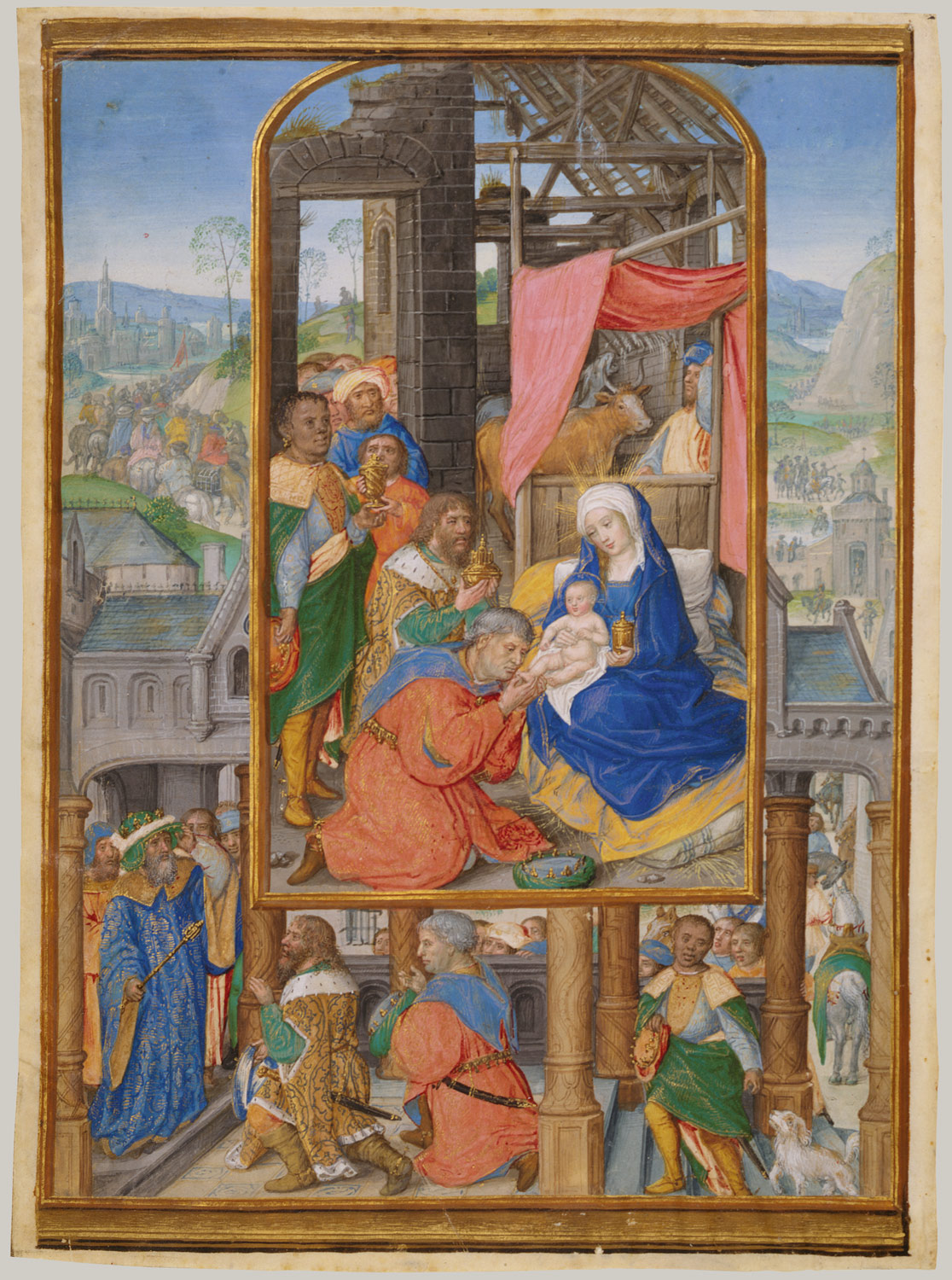
Manuscript Illumination with Adoration of the Magi, 
    ArtistMaster of James IV of Scotland (probably Gerard Horenbout),Manuscripts and Illuminations
Manuscript Illumination with Adoration of the Magi

Background Information:
Title: Manuscript Illumination with Adoration of the Magi
Artist: Master of James IV of Scotland (probably Gerard Horenbout)
Date: ca. 1515–25
Medium: Tempera, ink, and shell gold on parchment
Size: 6 1/2 x 4 5/8in. (16.5 x 11.7cm)
Stylistic Period: Renaissance
Culture: South Netherlandish

Analysis:
"Manuscript Illumination with Adoration of the Magi" is a painting from the Book of Hours, a collection of devotional prayers.  According to The Met Museum, the book's purpose was to inspire devotion for the non-ordained.  Book of Hours' earliest surviving English copy was written for a laywoman living in Oxford in about 1240 (University of Glasgow). The book had vast popularity in Northern Europe since it's original creation in 1240 up to the end of the 1600's.  

The subject is Virgin Mary holding Jesus, surrounded by three kings with gifts.  Outside of this, the townspeople appear to be praising the middle of the image, which is Virgin Mary holding Jesus.  This represents the famous scene from the bible of Jesus' birth.  In this, Jesus is held by his mother, Mary, and surrounded by wise men.  The use of background and foreground are very significant in the piece.  The focal point of the story, Jesus' birth, is placed in the middle and front of the image, while the townspeople are in the background.  The townspeople however all carry facial expressions of joy and praise. This could represent how Jesus carries sole importance, and society is second to that. Although the townspeople are not as important in the world, they gain their joy from Jesus. Secondly, the artist stresses the use of colors to emphasize the importance of certain subjects in the image, such as Mary and Jesus.  In the scene, Jesus is naked, which didn't shock me at first since he was first born.  However, when sketching the image myself, I realized that Jesus being naked led to his light skin tone being shown.  He is the only person in the scene in a light, bare color.  Even those who are clothed are in colors with darker undertones.  This portrays how he is the most important subject of the scene, and the artist wants the viewer's eyes to be drawn to Jesus right away.  Virgin Mary has gold, spark-like pieces above her head, showing a glow around her.  This is also the only time there is something truly glowing in the image, since all the other colors used were dull, such as the wise man's forest green and the building's stony grey.  This adds emphasis to Mary, and in combination to the light colors of Jesus, shows that Mary and Jesus are the true subjects of the image and the focal point for a viewer.  The artist's use of foreground, background, color, and emphasis, all aid in the portrayal of the meaning of the work; to communicate the value of the Christian life.  The foreground and background placements shows how the townspeople find pleasure in the birth of Jesus, portraying that a life with Christ comes with pleasure and happiness.  The use of bright colors on Mary and Jesus communicates that they are the light of the world, immediately giving them value.  The emphasis on the birth scene also shows how Jesus' birth is a symbol of Christianity, and therefore encourages people to follow Jesus, since he is a key feature of the religion.  

This work conveys the popular religious themes of the 1500's era because it shows a town revolving around a religious ideal.  This time period in England hosted the Great Reformation, an event centering around the creating of other branches of Christianity than Catholicism, due to new found corruption in the Catholic Church.  Because of this, the people of England were surrounded by religious beliefs since the reformation encapsulated the Church and politics of the time.  Another possible motivation for the creation of this piece is that the artist wanted people to remember the basis of Christianity, and forget the political issues going on.  This theory would be supported both by the chaotic context and the stylistic emphasis on Jesus' birth.  The value of the artwork remains the same today, since it serves as a portrayal of the basis of Christianity: Jesus' birth.  Since the religion itself still holds the same values, the artwork still communicates the same message of showing the values of a life with Christ.  However, today the image would most likely not be appreciated the same as it was in it's original time period.  This is due to the fact that there are now numerous paintings similar to this, that all portray Baby Jesus' birth.  There is also less of a reliance on artwork as a method of communication in society now, as technology has taken it's place.  In the 1500's however, the artwork was used as a way to communicate feelings and emotions.  Now, we simply take to twitter for an angry rant.


Sunday, November 3, 2019

Alienation in Lowood

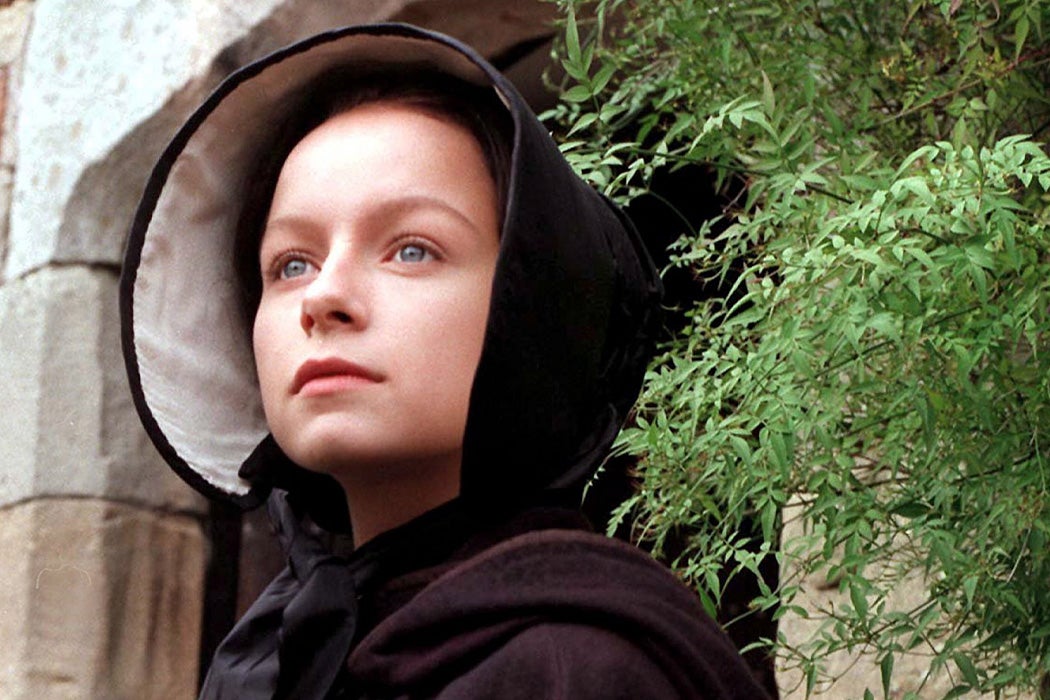
Image result for jane eyre
An image of Jane Eyre from JSTOR Daily


Jane Eyre is a novel set in England, written by Charlotte Bronte, and published in 1847.  The novel centers around Jane’s life as an orphaned child and being employed in a wealthy household.  Bronte's work displays the differences in wealth in 19th century England. However, in order to do this, Bronte had to publish the novel as, “Currer Bell” (York Notes).


In Chapter 7 of the book, Jane Eyre is embarrassed in front of her teachers and classmates. In the beginning of the chapter, there is a heavy allusion Lowood, a very religious town. At the arrival of Mr. Brocklehurst, it becomes evident Christianity is morphed into society. Then, when the Clergymen become present, there is a slight sense of mystery and suspense.  This is portrayed when Jane hides behind her slate and hides her thoughts.  

At one point, Jane accidentally drops and breaks her slate.  This causes an immediate backlash by Mr. Brocklehurst.  Once Mr. Brocklehurst recognizes Jane, she is also personally scrutinized.  This leads to public embarrassment of Jane, which leads her teacher, Miss Temple, to condole Jane. Bronte writes that "the kind whisper went to [Jane's] heart like a dagger." This use of figurative language, specifically the simile, creates a sense of the reader being brokenhearted, as it infers Jane has not ever acknowledged being loved, further revealing she has been alienated in both life and society. Therefore, even though Jane is surrounded by those in a society that is supposed to have perfect Christian values, their actions are far from Christian values, which makes those alienated in society feel unloved.

When Julia Severn is spotted by Mr. Brocklehurst with her curly hair down, he angrily forces her to cut her hair. He argues that the only way to be a Christian child is to refrain from individuality and fit in with all of the girls. Then following Julia's severe punishment, three women, two of whom were teenage girls bearing long hair with extreme curls, while the older woman styled a “false front of French curls." The metaphors used to describe the women's hair reveals how those characters are rich, and like to flaunt their ability to show individualism.  It is later revealed that those women were Mr. Brocklehurst's wife and daughters, showing extreme irony that right after Mr. Brocklehurst scolded Julia for her hair, his daughters and wife appear with excessive hairstyles flaunting individualism. The irony presented in the two situations portrays how the young girls are alienated in society for Bronte to argue the differences in the treatment and perceptions of the different social classes, the family representing a higher social standing and the alienated girls being in the lower class.  

Over time in Lowood, the morals and values of the members of the church, have altered from typical Christian beliefs. This is seen in Jane Eyre's alienation by Mr. Brocklehurst, as her characterization of being a outcast in society is revealed and demolished by a member of the church.  Then, the irony that Mr. Brocklehurst enforces rules in the school that girls are to be uniform in order to be Christian, then allows his family to express extreme individualism, reveals further the alienation of the young girls in society and communicates Bronte's argument that religious realm on society is corrupt, since the town is practically run by religion, however the people don't actually portray Christian values.  


Sunday, October 20, 2019

It's a No From Me

Sunday October 20th, 2019- 101 degree fever, slowly drowning in Latin, theater research presentation Wednesday, debating my existence...y'all would've thought I'd be doing a blog

It's a freebie, goodnight.


Sunday, October 6, 2019

The Beautiful Name of Allie

Although I was born as Allison, I've always been referred to as Allie for as long as I can remember.  My parents decided to name me Allie because my mom's favorite actress was Ali Macgraw, who starred in the movies Love Story (1970) and The Getaway (1972).  My mom was stuck on that name, so my dad had little choice but to agree.  When I was first born, my close family all called me Allie, however in pre-school my mom wanted me called Allison.  This did not sit well with me at all, as when I started Kindergarten I demanded all my teachers call me Allie.  My rationale for this was my neighbor down the street was in fifth grade (WOAH big girl!) and I thought she was the coolest person ever.  Her name was Allison, but she went by Allie.  Desiring to be as cool as my neighbor Allie, I would never let anyone get away with calling me Allison ever again.

When I think back on living with my name, my mind jumps to polar opposite positive and negative correlations in terms of nicknames.  I think of when I was little, my best friend's dad would always call me "Alligator."  This makes me feel positive and vibrant flashbacks to my childhood since my memories at their house, other than being called Alligator, consists of ice cream and trampolines.  I also have absolutely and utterly horrifying memories with my name, all thanks to Coach Edwards.  Coach Eds calls me "Al," and every time I hear that, my mind jumps to freshman year, when he would petrify me screaming "AL!" on the soccer field, proceeded with a long talk that would most likely leave me in tears as he rambled off all the ways I messed up.  What lovely memories!

I believe that my name suits me very well.  I like how my name isn't so exotic that people question it on the first day of class, however it isn't so common that I am constantly getting mixed up with other people.  According to Urban Dictionary, "An Allie is a girl who can always put a smile on your face. She'll make you laugh, and enchant you with her beautiful smile. She's a clumsy girl, but that just adds to her charm. If Allie wants something, she'll get it." When I read this, I couldn't help but laugh because anyone who is remotely close to me will know that every phrase of this is true.  I definitely come with a sense of humor, and most of the time that humor comes from laughing at myself and my clumsiness.  I like to think I enchant people with my beautiful smile, but I guess that is up for you to decide.  In terms of "if Allie wants something, she'll get it," I will just reference one example: I begged for a cat for three years, and here I am, typing this blog, sitting next to Boobeary, my cat.  

When I think about a time of "being two" in my life, my mind jumps to my personality versus my lifestyle.  As alluded to in my previous paragraph, my personality entails a whole lot of humor, very little seriousness, and a lot of "YOLO" moments. This leads everyone's first impression of me to be that I am a very carefree, yet fun person.  However, this somewhat competes with my lifestyle.  When people get to know me better, they understand that my mind is always in fifty places at once, and I'm always doing something.  I often find myself drowning in schoolwork, working out hectically, or driving slightly over the speed limit to get to soccer in time.  This creates a comparison of my personality and my actual lifestyle because although I try to come off as that "fun" girl, my life is actual full of long nights doing homework and not enough time for a social life.  I think this has led me to a personal battle of constantly trying to live out my personality so society is more accepting of me, when in reality I get stuck in my given lifestyle that blocks me often times from doing this.  This portrays the bigger dilemma our culture faces today of society pressing people, especially teenagers, to be one perfect image.  We see this on social media, as young girls are communicating one version of themselves on their page, while most likely living out another, less "picture-perfect", version of themselves offline.  Overall, I think that everyone is faced with two versions of themselves that are in constant battle with one another in life, whether that battle is apparent or not.  


Sunday, September 22, 2019

Atwood and Huie's Othering


Wing Young Huie is a photographer based in Saint Paul, Minnesota.  In 2010, he created the University Avenue Project, which portrayed both the diversity on the streets of Saint Paul and the experience of becoming an American.  The image stood out to me strongly because the chalkboard's reading, "I feel like a fish swimming around in my thoughts" was a quote I felt like I can relate to in my life often times.  In addition to the boy holding the chalkboard, the picture is in black and white, the boy is looking straight, however away from the camera, and appears to be in a wheel-chair.  Also, the background of the image looks to be a messy setting, like an apartment.  

However, analyzing the image more in-depth, I can see that the boy's hair is hiding his eyes.  This would be done purposefully by the boy, since he would either choose to not get a haircut or choose to style his hair so that it would cover his eyes.  It can be inferred from this that the boy wants to silently communicate a message, since he is shielding his appearance, yet still holding the chalkboard.  This is similar to Margaret Atwood's The Handmaid's Tale, where the main character, Offred, is constantly attempting to show her own message, rather than society's.  However, due to oppression, she has to indirectly communicate her message.  To do this, Offred records her story.  Offred says that "if it's a story I'm telling, then I have control over the ending...but if it's a story, even in my head, I must be telling it to someone. You don't tell a story only to yourself. There's always someone else. Even when there is no one" (Atwood 39).  This revealed her intention of recording her life was so that someone else would hear her message.  Having control over the ending means that she is able to say her message, rather than someone hearing the societal message that Offred is likely against.  Therefore, both Huie and Atwood's pieces convey a silent message.  

Another aspect of the image that can be seen when analyzed more in depth is the purpose of the lack of color.  Huie chooses to publish this image in black and white, even though there are obvious areas where color would typically be, such as his face and hair.  This black and white photography is seen in all images of this particular gallery.  The purpose of the lack of color is to portray how the subject of the image, the boy, is similar to the people on the streets of Saint Paul. Huie wanted to highlight that although there is great diversity in the streets, all of the people of Saint Paul are the same.  The use of black and white photography leads the viewer to focus less on race and more on portrayed messages.  Then, in the individual messages is where the unique factors of each person come available.  For this boy, his unique factor is how he feels lost in his mind.  In The Handmaid's Tale, Margaret Atwood uses the same technique of first unifying a group, then within the group identifying individualistic features.  Offred refers to herself as a "distorted shadow" (Atwood 19).  The metaphorical comparison of herself to a distorted shadow communicates how although she is similar to others, she is slightly different and individualistic.  A shadow is a reflection of another object, however a distorted shadow would be one that is a reflection of something, yet is changed or altered slightly from the original image.  In this context, Offred means that while she is a Handmaid, she isn't the same as the others.  Atwood uses Offred's awareness that she is in the class of Handmaids, yet she is unique to convey her characterization of a young woman vying for independence.  

The term "othering" is a feeling that an individual is different than someone, something, or a group.  Atwood and Huie both portray "othering" in their works through language. As discussed above, both authors use language through the communication of a silent message.  In Huie's photograph, the boy's body position faces him away from the camera so he cannot be seen and identified, however his message is placed directly infront of the camera.  In Atwood's novel, Offred reveals how she is silently telling her story as she goes through life, with secret recordings.  In both of these, the individuals portrayed feel they have something different, in this case a message, that casts them apart from the main group of society.  In Huie's image, the boy feels he is lost in his own mind and thoughts.  In Atwood's novel, Offred feels that she believes her thoughts and actions in day-to-day life are different than those around her, making them important to share for the next generation.  

Another way "othering" is displayed in both works is through both subjects feelings that their minds are overwhelmed with thoughts.  For the boy, he is "swimming in his thoughts", meaning that he is overwhelmed with something in his head.  Likely, these thoughts are something that to some degree he cannot communicate.  This lack of communication ability then leaves him feeling like he is different mentally than others.  This is similar to Offred, who mentions several times in the book that her mind is full of thoughts she cannot act out because of the limitations of Gilead.  For example, her mind is often overflowing with thoughts about Luke and wanting to be with Luke, however Gilead refrains her and Luke from being with eachother.  Both Atwood and Huie use language in their works to display how "othering" is present mentally.

Overall, both Huie's image and The Handmaid's Tale use the feeling of "othering" to portray how society has caused an oppression of communication.  For Huie, he shows how the subject of his image is overwhelmed with his thoughts that he cannot communicate, and therefore is silenced.  For Atwood, she shows how Offred is limited in her communication abilities because of the laws of Gilead, which leads to her mind being full of rebellious thought, that ends up overwhelming her.  However, both Atwood and Huie express through their work that although their subjects are part of a larger group, they express these individual traits that are solely unique to them, but can be applied to society.  


Sunday, April 14, 2019

1984 Comparisons


George Orwell wrote the famous book, 1984, that centers around the dystopian society of Oceania.  Orwell wrote the novel in 1948 as a warning against the totalitarian effects on society (BBC). He was inspired because he was worried about how the on-going World War II would affect the government (The Odyssey). The key characteristics of Oceania is the constant monitoring of the government on its people and limits of freedom. There are countless numbers of covers for the book, but I chose two that portray the same overall message in very different ways, that an overbearing government can ruin society.

The cover on the right popped out to me more, as it shows citizens of Oceania surrounded by the party's most famous slogans and images. The first noticeable aspect of the book was the sign reading "Big Brother is Watching You!"  Big Brother is a motif brought up throughout the book that draws attention to the lack of privacy in Oceania.  More slogans are brought into the cover, "War is Peace, Freedom is Slavery, and Ignorance is Strength." These slogans symbolize another key feature of the book, the governments alteration of facts and extreme propaganda. The men are wearing blue overalls, which is what all members of the party are required to wear.  The women are also dressed in denim, alluding to the support of the blue overall dress code.  The relationship between the man and the woman in this cover also symbolize the party's discouragement of sex.  This is so because they are facing away from each other, appearing to ignore the other's presence.  The discouragement of sex is also visualized because button on the woman's shirt read "Anti-Sex League," which is what the government put into place to halt the act itself, unless if it was for the purpose of making a baby.  If this is a button, as it appears to be, that would aid the idea that the government was actually using propaganda-like techniques to promote sexual restrictions.  I also noticed the broken bricks at the bottom, that the man with a "Big Brother" face appears to be knocking at with a tool.  Throughout Winston's adventures in 1984, he discusses how society was disheveled and the cities were not provided with basic essentials, or always in lack of a good.  The broken bricks then could symbolize how society is shattered by the government since "Big Brother" is actually the government, and he is hitting at the bricks with a tool.

The book cover on the left shows an over sized, odd looking pair of eyes, accompanied by a man standing in front of the skyline of a city with his back to the audience.  The placement of the eyes above the city, along with their massive size, communicate that that the citizens are constantly being watched because the eyes are a symbol of the government.  The man is meant to represent the people of Oceania because we are not shown his face, only the characteristics that all party members share, like the blue overalls of the party members.  This plays into the idea that the people of Oceania are not unique, merely just tools for the government.

Overall, both book covers contain immense amounts of symbolism.  The main idea both share is that the citizens are constantly being watched and observed, shown with the Big Brother poster, then the massive eyes.  The symbolism of surveillance shows the main aspect of the book which is the extreme security and restrictions in Oceania.  Although the covers differ in the way that one communicates its theme with words and one with images, they both portray the same idea that the lives of the citizens will be restricted by the overbearing rules of the government. 

Sunday, March 17, 2019

Blog Post #4- A Full House Mess


The "Full House" cast, captured by Entertainment Weekly.

       
      "Full House" is a popular show for all generations that has been around since 1987.  Audiences love the chaos and humor the show has, and also how it presents the American household not as perfect, but rather a loving mess.  However, the last week has definitely presented off-screen chaos for the show as one of its main character's, Aunt Becky, has been caught up in an academic fraud scandal. In this Forbes article,  Christopher Rim writes about how the whole situation unfolded, and then the financial complexities of the situation.  To start off, when I first heard of this news, I was shocked.  Aunt Becky is going to jail? I honestly did not think very deeply about what she had actually done until this article presented me with thoughts about how serious this really is.
        So I know you're probably wondering right now, who is Aunt Becky and why is she going to jail?  Well, Aunt Becky is Lori Loughlin in real life, a 54 year old actress who is married to Mossimo Giannulli.  They have two kids, Olivia Jade and Isabella Rose.  The parents are now accused of paying a bribe of $500,000 to make it appear as if their daughters were recruits for University of Southern California's crew team. This is all coming to the surface with a slew of other arrests of high-profile parents who pay upwards of a million dollars to get their children into top schools.  The Forbes article points out a number of things that drew my attention.  First off, neither of the girls have ever even rowed on a team!  As an athlete who looked into college athletics, this angered me immediately.  Trying to play a collegiate sport is a long, grueling process where not only is around 15 years of hard work in the sport enough but the school has to actually want you to come, which is where many people have trouble in the recruiting process.  To think there are people who commit their entire lives to rowing, but these two girls pay their way in by saying they have done this, is just upsetting.  
      The article then brings up a point I agree with, instead of bribing coaches to lie about your children’s athletic ability, why not invest in developing that ability?  If there was $500,000 split between the two of them for bribery, that would mean $250,000 each.  Could you imagine what $250,000 worth of tutoring would look like?  The girls had the monetary means to have enough tutoring for a perfect SAT score or nearly perfect test grades.   But I guess their family was more attracted to taking the easy way out rather than working for college acceptance like every other American student must do.  
      Lastly, the Forbes article brings up the results from this week's news in regards to their families' jobs.  Lori Loughlin has been fired from both Fuller House, the new version of Full House, and Hallmark Channel.  Olivia Jade ended her YouTube channel and Sephora cut ties with her.  Also, both girls have dropped out of USC.  In regards to Loughlin, I now have no sympathy for her and am perfectly fine with her losing her jobs.  However, when it comes to the girls, I do have some lingering thoughts and questions.  Olivia Jade's future has most likely been demolished because the brand she has built up has been torn apart, and she does not have much hope in regards to college since dropping out is not the best look on another application.  However, Forbes says at the end of the article a line that made me think: "But somewhere along the way, it seems that the Giannullis decided that bragging rights and their own egos were more important than the true aspirations (and mental/emotional wellbeing) of their children."  Are these girls' futures being ruined because of something their parents did that they didn't have control over?  For all we know the girls could have begged their parents not to do this because they feared it would get out or they didn't want to go to a top school like USC.  If you assume this happened, it sure is devastating that their lives truly have been both built up and destroyed by their parents.
     Overall,  the news of Lori Loughlin's arrest caught me off guard at first.  However, after reading Christopher Rim's Forbes article about it,  I was both angered that people were able to get into colleges that most people dedicate their lives to getting into and upset that people in this world really do take advantage of money and people the way they do.  But the last line of the article reminded me, there may be another side of the story we aren't hearing.  Either way, this sadly reveals even more barriers in the college admissions process.  

Sunday, March 3, 2019

Post #3- Pepsi Advertising

"More than OK" Pepsi ad in Super Bowl 2019


For many of us, the Super Bowl isn't about the football at all.  If you're like me, the Super Bowl is ONLY relevant for three reasons: judging the halftime show, the Puppy Bowl, and the commercials.  This year Pepsi resurfaced once again with a commercial based off celebrities.  They feature Cardi B (why?), Steve Carell, and Lil John.  The commercial begins with a common occurrence for all soda-drinkers.  The customer asks the waitress for a Coke but the restaurant only serves Pepsi.  This quickly introduces the first technique of a problem and solution.  The ad focuses on the consumer problem of Coke not being served in restaurants and gives the solution of Pepsi, which they believe is better anyway.  The use of celebrities was to try to get the audience to feel more attached to the ad because if they saw their favorite celebrity, which I hope is NOT Cardi B, they would be more tuned in and feel obligated to drink Pepsi because their idol suggests doing that.  This uses ethos through having a person one may believe as credible saying they prefer Pepsi in order to convince the audience it is truly best.  That is the reason a celebrity is not the customer but rather the one suggesting Pepsi.  
Steve Carell uses rhetorical questions to introduce pathos to the commercial.  He says "Are puppies okay?  Is a shooting star okay?  Is the laughter of a small child okay?"  This references the repeated phrase that Pepsi is "More than OK."  Since the Puppy Bowl is a vital aspect of the Super Bowl for me, this caught my attention because I have a soft spot for animals.  He also appeals to people by using a child's laughter, which most love, to emotionally attach them to Pepsi.  
Two of the celebrities featured have famous phrases that relate to the catchphrase of the ad, "More than OK."  Lil John yells "OK!" which is a reference to his famous song, "OK, yeah."  Cardi B also uses her phrase "okurr" when she makes her entrance.  Both of these celebrity references assist in the overall message that Pepsi is "More than OK" by once again trying to relate the audience to the commercial through the use of celebrities.  
I have an Oppositional Reading Perspective to this Pepsi ad because I think all sodas are just disgusting.  I think both Pepsi and Coke are not tasty and not to mention the calories and detrimental health affects just draw me far away from ever wanting to drink either of them.  The ad uses a hasty generalization that everyone will want to order Pepsi/Coke products when they eat at restaurants.  This is far from accurate because only 50% of adults drink soda, and many of those might not even drink Pepsi.  Therefore, I think this advertisement is incorrect in the way that it portrays the popularity of Pepsi.  The message encouraging Pepsi over Coke is just wrong and the creators suggesting the audience should consume an unhealthy, fattening drink is also ethically wrong.
Pepsi made it's appearance in the Super Bowl once again by using celebrity to catch the audience's attention, ethos to appeal to the credibility of the celebrities, pathos to emotionally connect them, and a generalization that everyone drinks Pepsi to convince the audience that Pepsi is better than Coke.  

Friday, February 15, 2019

Should the United States Have Gone to War in 1812?

Image result for the war of 1812
 An image from History Channel shows the Battle of New Orleans, one of the last battles in the War of 1812.

In HOA, we have recently addressed thoroughly the War of 1812 and the events leading up to this.  This corresponds to the question, "Should the United States have gone to war in 1812?"

I believe the United States should not have gone to war in 1812 against Britain because in the end none of the original problems were resolved, the economy was already struggling, and the war was bound to cause unnecessary American deaths due to the experience and numbers in the British army.  

In 1812, the economy of the United States was suffering and plummeting due to issues within the Articles of the Confederation, the main issue being that the government was not allowed to directly tax.  The lack of money in the government led to soldiers not being payed, which further caused protests and riots all over the United States.  An example of this is Shay's Rebellion, where ex-soldiers in Massachusetts were not paid at all or in full for their service.  The rebellion involved violent attacks on courthouses and government buildings, demanding money.  Also, America has just implemented the Embargo Act, stopping all exports from US ports.  This caused all foreign income to halt while merchants and their families were suffering without money and were angry at the United States for practically taking away their jobs and only source of income.   Due to an economy in downfall caused by the Embargo Act and lack of direct taxation, the United States was not prepared economically for the price of war.

The US should not have gone to war against Britain in 1812 also because the great numbers and experience of the British military heavily outweighed the weak US militia.  This weakness would inevitably lead to many unnecessary deaths of American servicemen because they were purely outnumbered and many had never fought in a battle before.  The British were ending their war against Napoleon, so it is fair to say that mostly all of their soldiers had experience against one of the largest military powers in the world, France.  The US militia consisted of farmers, merchants, and other inexperienced men who fought either because they needed a job or their patriotism.  At the beginning of the war, the British had a whopping 245,000 men while the United States had a depressing 7,000.  Throughout the war the US gained men but still did not come close to the number the British had, so declaring war with only a tiny fraction of the men the opposing army had was going to inevitably lead to slaughtering of Americans on the battlefields by the British.  

Lastly, looking back on the War of 1812 proves the United States should have never declared war on Britain because in the end, none of the original issues changed.  A main cause of the war was impressment of US military.  This was when the British would capture American men on ships and force them to serve for the British military.  They would often say that the American sailor was British originally and turned to the American side, so they must come back and serve for Britain.  This angered Americans and caused the US military to lose even more men, narrowing down their minuscule starting numbers.  At the Treaty of Ghent, the treaty that ended the war, the act of impressment was not addressed and the British continued to do it, even after the war was over.  Another cause of the war was that the United States wanted Canada, which the British currently owned.  The British defended Canada greatly because it housed most of their forts on North American soil, so they would not give up this land easily because it meant they would have mostly no grip on North America.  The United States could barely defend their own land from the British and angered Native Americans, so the thought of expanding into Canada was not possible from the start.  Once again, at the Treaty of Ghent, the issue of Canadian territory in US hands was not addressed and the British continued to dominate Canada.  Therefore, the as reflection on history occurs, it is evident the United States should not have declared war on Britain in 1812 because none of the main issues causing the war would be solved or addressed at the end of the war.  

Overall, the United States should not have gone into the War of 1812 because the economy was not ready for war, the British greatly outnumbered the Americans, and in the end none of the main causes of the war would be solved.  The war was not an American or British victory because nothing changed, so going to was was pointless. Thousands of lives would have been saved without it and the diplomatic results would have been the same.  

Saturday, February 2, 2019

Behind the Facade of John F. Kennedy


John F. Kennedy was born into a wealthy, politically connected Boston family.  His childhood was lived in prestigious private schools alongside his eight siblings.  He attended Harvard University and shined in his service during World War II.  Before his presidential term, Kennedy served in the US House of Representatives from 1947 ti 1953 and the US Senate from 1953 to 1961.  He began his presidency at forty-three as the youngest serving president yet.  He brought hope and new ideas as the United States recovered from World War II.  However, his service in the White House was cut short on November 22, 1963 when he was assassinated in Texas.  In 1971, Aaron Shikler revealed John F. Kennedy's presidential portrait, which his widow, Jackie Kennedy, assisted in.

The first thing that stood out to me in the portrait was the posture of John F. Kennedy.  He is standing with his arms crossed, head down, and eyes closed,  I interpreted that as being a display of critical thinking during stress.  During his presidency, John F. Kennedy was faced with leading a powerful country within a time of diplomatic unrest.  A key point in his term was how he handled the Cold War and communism, which were crucial and stressful topics.  Thus, in the portrait, John F. Kennedy could be contemplating a serious decision since these were abundant during his years as president.

I also noticed how the artist chose very somber colors.  The background of the portrait is a lighter shade of brown and Kennedy's suit is a dark brown-grey.  The color brown signifies a serious tone towards duties and responsibilities.  John F. Kennedy was known for his dedicated to the United States, from serving in World War II, being in the House of Representatives and Senate, to a presidential term.  Therefore, Shikler was attempting to portray how serious Kennedy took these services and that he had a desire to fulfill hos duties to his country.

However, the hazy tone added to the background and his skin depicts the drawbacks of these desires, as it symbolizes tiredness.  Since Mrs. Kennedy assisted in the portrait, she most likely gave a very real and honest account of how his presidency was outside of what the public could see.  John F. Kennedy was the first president to be watched on screen, so he put up a front for the whole nation as an inspiring, hopeful man with promise.  However, a presidency is one of the most stressful positions in government and the thought of now being watched by a whole nation did not ease this stress and led to tiring days trying to be a symbol of hope for the people of the United States.  Through color, the artist is trying to argue that while John F. Kennedy was a man who was dedicated to the people and his duties, the job of being a president can tire those who are most committed.

Aaron Shikler was given the job of interpreting the life cut short of a president who was loved by the people.  To do this, he incorporated colors, facial expressions, and stance to convey how John F. Kennedy was a man devoted to serving his country, even when that caused a toll on his mental well-being.  In the bigger picture, it is demonstrated that a presidency can wreck havoc on the lives of those most devoted to the job and loved by the people.